
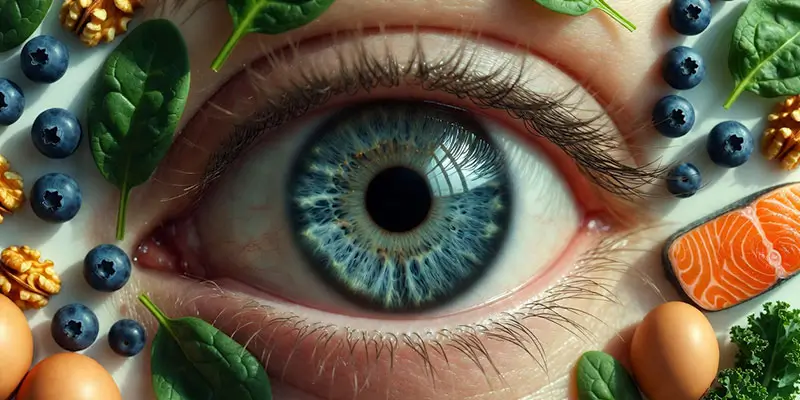
Over the past two decades, one of the most important discoveries in AMD research has involved the role of nutrition in protecting retinal cells.
Large clinical trials conducted by the National Eye Institute, known as the Age-Related Eye Disease Studies (AREDS and AREDS2), demonstrated that certain nutrients may significantly reduce the risk of advanced macular degeneration.
These studies identified several key compounds that support retinal health:
These nutrients contribute to the formation of macular pigment, a protective layer in the retina that filters harmful light and reduces oxidative stress.
More recent research suggests that dietary patterns rich in carotenoid-containing vegetables, fruits, and omega-3 fatty acids may further support retinal resilience — going beyond standard supplementation.
Clinical Commentary
A Harvard-Trained Ophthalmologist Explains the Importance of Nutritional Support for the Retina
Among physicians who have closely followed these developments is Dr. Ming Wang, a physician-scientist trained at Harvard Medical School and MIT with expertise in both laser physics and ophthalmology.
Dr. Wang's academic work was recognized at Harvard when his thesis was awarded Best Basic Life Science Research Paper of the Year and later published in the scientific journal Nature.
Following his medical training, he completed clinical education at two of the most prestigious ophthalmology institutions in the United States:
- Wills Eye Hospital
- Bascom Palmer Eye Institute
Dr. Wang later became director of the Vanderbilt Laser Sight Center, where he has performed more than 55,000 eye procedures on patients from over 40 U.S. states and more than 55 countries.
Throughout his career, Dr. Wang has focused on translating scientific discoveries into practical treatments that restore or protect vision.
One of his most notable breakthroughs involved discovering that amniotic membrane tissue could help repair damaged ocular surfaces, which led to the development of amniotic membrane contact lenses now used in eye treatments worldwide.
While this discovery primarily addressed corneal damage, it demonstrated how biological science can lead to new strategies for protecting vision.
Nutrition and the Future of Macular Protection
Today, many ophthalmologists believe that protecting retinal health requires a combination of clinical care and nutritional support.
Emerging research suggests that maintaining a diet rich in:
- Leafy green vegetables
- Colorful fruits
- Healthy fats
- Carotenoids
…may help support macular pigment density and retinal metabolism.
These dietary patterns may complement established clinical approaches, such as AREDS2 supplementation, in helping maintain visual function as the eye ages.
As research continues to evolve, experts emphasize that early detection, proper nutrition, and ongoing ophthalmologic care remain essential strategies for preserving vision.